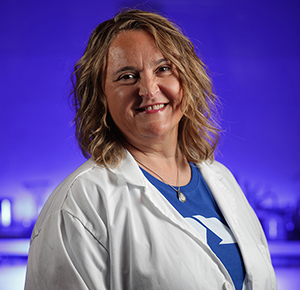
UC Riverside engineering professor Mihri Ozkan will deliver the keynote address at an upcoming meeting of German and American engineers and industry leaders, where she will discuss how to power data centers while limiting their environmental impact.
The German-American CleanTech Delegation Meeting will take place Dec. 1 at the Four Points by Sheraton hotel in San Diego.
“From rising electricity demand and grid challenges to advanced energy storage, intelligent cooling, and energy-efficient infrastructure, the AI revolution presents both unprecedented challenges and exciting opportunities for clean-tech innovation,” Ozkan said.
Ozkan will present her research on how data centers can coordinate when and where they run AI computing jobs. By taking advantage of differences in equipment and electricity supplies across regions, operators could route some jobs to sites where they would generate fewer carbon emissions while maintaining computing performance.
In earlier research, Ozkan and her husband, UCR engineering professor Cengiz Ozkan, used computer simulations to test this approach. They found it could reduce carbon dioxide emissions by as much as 45% over five years and extend the useful life of a fleet of servers by 1.6 years.
Her keynote, “Powering the AI Era: Energy-Efficient Data Centers and Market Opportunities in Southern California,” is part of a breakfast program presented by the Transatlantic Venture Association and trAIDe, a German consulting firm that helps companies expand internationally.
The program runs from 8 to 10:30 a.m. and includes presentations and a moderated discussion on how to supply power sustainably to data centers and other facilities that use large amounts of electricity.
Ozkan is a professor of electrical and computer engineering at UC Riverside’s Marlan and Rosemary Bourns College of Engineering and an inaugural National Invention Ambassador, selected through a partnership between the National Academy of Inventors and the U.S. Patent and Trademark Office.
She has also studied how the design of computer chips can reduce AI’s energy demands. She led a review in the journal Device that examined how dinner-plate-sized chips known as wafer-scale chips could run AI tasks more efficiently.
The San Diego program will give participants a chance to discuss how research can inform commercial technologies. Optional one-on-one meetings with German company leaders will follow the morning program.
“I look forward to engaging with German and American industry leaders, innovators, and technology providers to explore how research, commercialization, and international collaboration can accelerate a more sustainable digital future,” Ozkan said.